
-
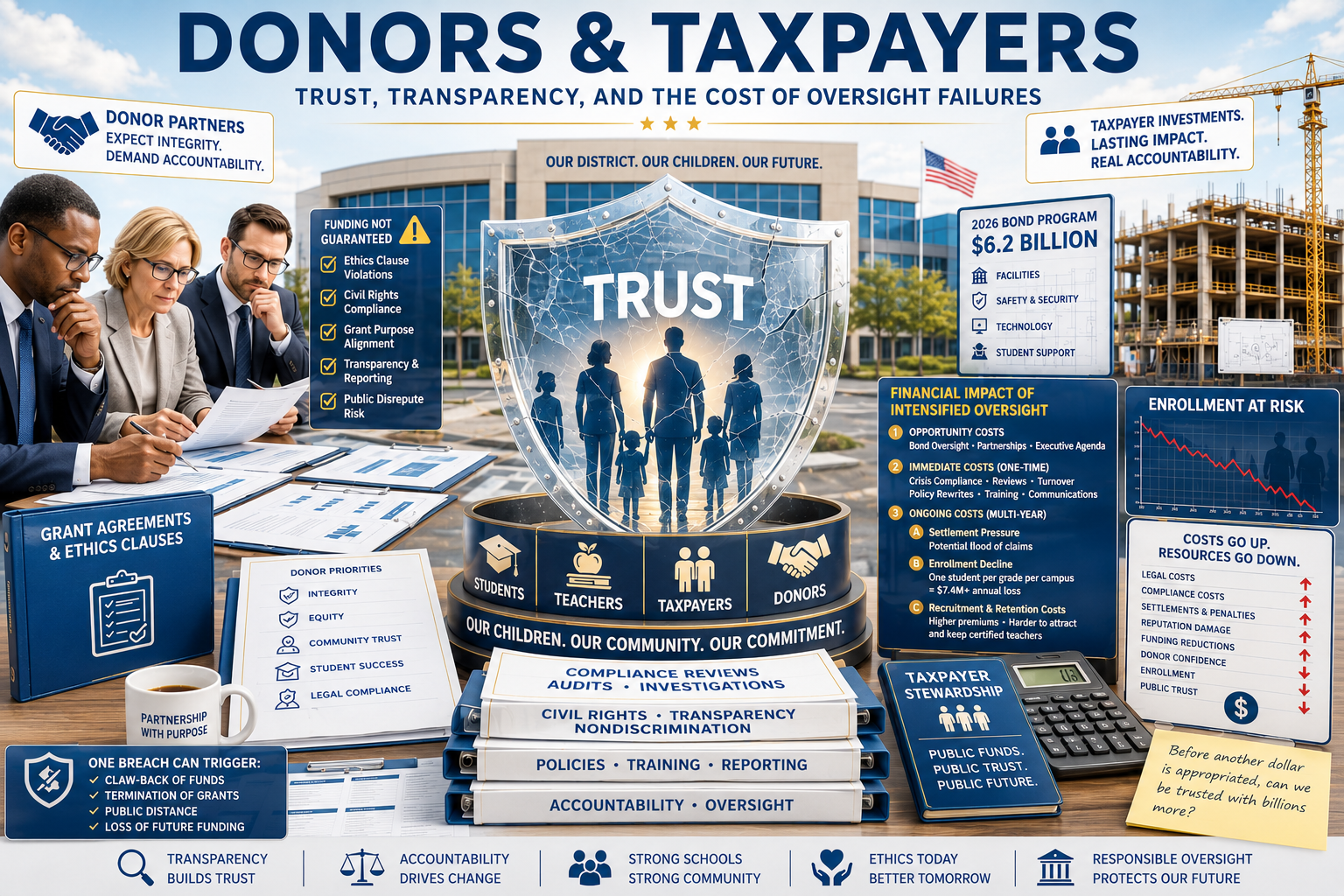
Ethics Clause Violations – The Federal government and most donors can claw-back, terminate, or debar funding immediately for conduct causing public disrepute, violating law, or conflicting with the grant purpose.
-
Federal Funding Risk: ESSER claw-back authority under 2 C.F.R. Part 200 allows recovery of funds if civil rights compliance is breached during grant period.
-
Toyota USA Foundation & SMU – Toyota’s Corporate Social Responsibility framework centers on integrity and community trust. SMU’s own donor and partner guidelines commit to compliance with federal/state laws and nondiscrimination principles. Allegations of racial discrimination, violations, and noncompliance with TFC reporting obligations directly collide with these values.
-
Bill & Melinda Gates Foundation – Requires grantees to maintain compliance with civil rights and transparency standards. Public litigation alleging systemic discrimination can be grounds for reevaluation of the partnership.
-
Texas Instruments Foundation – Publishes commitments and ethical standards for grant recipients. Any substantiated report of racial discrimination by a funded entity could trigger public distance or withdrawal.
-
Holdsworth Center – Leadership development model explicitly depends on district commitment to creating positive learning environments. This case’s allegations undermine the premise of their investment.
-
United to Learn, Laura Bush Foundation, USAA, AT&T, Reliant – All are public-facing brands with high visibility and low tolerance for controversies involving discrimination or child safety law violations.
-
Taxpayers – Financial Impact of Intensified Oversight
-
Opportunity Costs: Negative impact to 2026 $6.2 billion bond oversight, chilled partnerships with corporations and universities, and constrained executive agenda due to compliance workload. Before appropriating another dollar, stakeholders must ask: “Can a district who spent hundreds of thousands of taxpayer dollars to shield its misconduct from public scrutiny be trusted with billions more before resolving the problems?” Because public education is not a business of appearances: it is a promise to children, families, educators, and future generations to do the best we can; that honesty and fairness will not be sacrificed for the sake of appearances; that the courage to speak truth, demand transparency, and rebuild trust exist even when inconvenient or embarrassing; that responsibility to correct what goes wrong is as important as inspiring change.
-
Immediate Costs (one-time): Crisis compliance, independent reviews, executive turnover, policy rewrites, training, and communications.
-
Ongoing Costs (multi-year): “Copycat” cases, penalties, enrollment declines, certified teacher recruitment and retention premiums, funding reductions, sustained PR/legislative management, donor fatigue over ethics clause violations.
A. Settlement Pressure – Potential flood of claims from current and former teachers terminated within five years, who were told evidence existed but was never produced.
B. Enrollment Decline – In addition to the anticipated participation in the Texas Education Freedom Accounts (TEFA) program, the compromising of student safety and the increased risk of libel charges by educators may accelerate enrollment flight. If one student per grade per campus leaves, annual losses exceed $7.4 million.
C. Certified Teacher Recruitment/Retention Costs – The systemic-failure narrative: “compliance violations” + “evading impartial investigation” + “failure to enforce” + “rubber stamp approvals creates a precedent where unvetted student allegations may be used to remove teachers without due process and may have a chilling effect on recruitment and retention of certified educators. The district already spends millions of dollars attracting certified teachers outside the state and country, how much more will need to be budgeted in light of this conduct?
Every dollar diverted to concealment, unwarranted litigation, or crisis management is a dollar taken from classrooms, students, and teachers. True educational progress requires leadership that manages resources wisely and earns the public’s confidence. If we want better schools, we need leadership that manages resources wisely and earns the community’s trust. Fiscal responsibility and ethical governance are inseparable, trust must be earned through honesty, compliance, and accountability.